
List of Technical Schools in Ghana – 2026
This article contains an updated list of technical schools in Ghana for 2026.
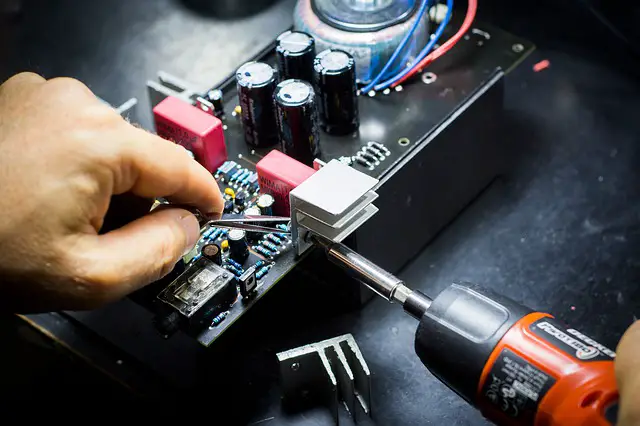
Technical schools, otherwise called technical colleges or technical institutes, provide specialized training in a specific career field or profession, including computer technology, business administration, electronics, medical assisting, automotive technology, and culinary arts.
Programs at technical colleges can take two to four years to complete, after which a certificate, diploma, or Higher National Diploma (HND) is awarded, depending on the level and nature of the programme.
Students attending technical colleges usually take courses related to their major from their first year, unlike many conventional universities that require students to complete general education courses before focusing on their chosen field of study.
Technical colleges emphasize practical, hands-on training and often offer internship experience in a relevant work setting. This exposes students to real workplace conditions, making them more job-ready compared to purely theory-based programmes.
Depending on your goals, financial capacity, and ideal career, a technical school could be the right choice. Here are a few reasons to attend a technical college:
6 Reasons to Attend a Technical School in Ghana
- Less Costly: Due to technical programmes being typically less time-intensive, the cost of tuition is usually significantly less than a university.
- Career-focused: Technical colleges prepare students for specific careers. If you know what you want to do and it requires hands-on training, a technical school is a strong choice.
- Practical Training: Universities tend to take a more theoretical approach, while technical schools focus more on the practical. Technical colleges offer students opportunities to experience what their future workplace might be like through internships and on-the-job training. Admission requirements for most technical programmes are also generally less competitive than for universities.
- Flexible and Convenient: Many technical programmes offer weekend and evening courses, which is ideal for individuals who are working and studying at the same time.
- Job Placement Support: Technical schools place emphasis on career development by offering seminars on topics such as how to find a job, how to write an effective CV, and how to communicate with potential employers.
- Focused Study: Students at technical colleges take courses directly related to their specific field of study, without mandatory unrelated subjects.
In this article, we will be considering a list of technical schools in Ghana. Ghana is recognized as one of the countries with a well-developed educational system in Africa. The country has invested significantly in education, establishing several institutions of various types. Technical and vocational education in Ghana is regulated by key statutory bodies including the Commission for Technical and Vocational Education and Training (CTVET), the Ghana TVET Service (GTVET), the National Teaching Council (NTC), and the Ghana Tertiary Education Commission (GTEC). Prospective students are advised to verify any institution against the official CTVET Register of Accredited TVET Providers before enrolling.
Ghana also has a number of industries including manufacturing and production companies, which creates strong demand for technically skilled graduates.
TOP LIST OF TECHNICAL SCHOOLS IN GHANA
There are over a hundred technical schools across Ghana. Below are some of the well-known institutions:
- Koforidua Senior High Technical School
- St. Joseph’s Technical School, Saboba
- Don Bosco Technical Institute, Odumase
- Brakwa Senior/Technical School
- Cape Coast Technical Institute
- Kumasi Technical Institute
- Asuansi Technical Institute
- Royal Technical College
- Keta Senior High Technical School
- Boso Senior High Technical School
- National Technical Engineering College, Accra
- Metropolitan Samonya Tech Institute, Akatsi
- Anne Vocational Institute, Yilo Krobo
- Vitus Technical Institute, Sunyani
- Abutia Community Secondary/Technical School
- East Catholic Technical Institute, Kumasi
- Metropolitan Adventist Secondary/Technical School, Techiman
- Samonya Technical Institute, Akatsi
1. KOFORIDUA SENIOR HIGH TECHNICAL SCHOOL
Koforidua Senior High Technical School is one of the oldest technical schools in Ghana. It was originally established as a boys-only school but later became a mixed school following a change in name and policy in the early 2000s, and has since admitted both male and female students.
The school is recognized as one of the top technical schools in Ghana and is known for strong academic and technical performance. It places focus on science and technical courses including:
- Auto mechanics
- Technical drawing
- Metalworks
- Building Construction
- Applied Electricity
- Woodworks
There is also provision for General and Visual Arts such as Graphic Design, Picture Making, Economics, and Leatherworks.
2. ST. JOSEPH’S TECHNICAL SCHOOL, SABOBA
St. Joseph’s Technical School was established in 1967 by the SVD Missionaries and was later taken over by the Ghanaian government in 1984. The school is recognized for its record in WASSCE and SSCE, and was established with the vision of producing capable and competent technical students with the required skills and knowledge to contribute to Ghana’s economy.
The school offers the following courses:
- Home Economics
- Visual Arts
- Agriculture
- Business
- General Science
- General Arts
3. DON BOSCO TECHNICAL INSTITUTE
This is a mixed school located in Odumase, Sunyani, Bono Region, Ghana, operating as both a Boarding and Day school. It is supported by the government and was established with the vision of training students with the required knowledge and skills in Agriculture, Printing, Electrical, Creative Art, Computer Technology, Building Construction, and related fields.
Don Bosco Technical Institute is known for consistently producing strong results in WASSCE and graduates who are well-absorbed into Ghana’s labour market.
4. BRAKWA SENIOR/TECHNICAL SCHOOL
Brakwa Senior/Technical School was established in 2011 by the Government as a day school and was later transformed into a boarding school in 2015. Despite being a relatively newer institution, it has grown to become one of the recognized technical schools in Ghana, with students recording strong performance in both WASSCE and SSCE.
Courses offered include:
- Metal works
- Technical drawing
- Building Construction
- Applied Electricity
- Auto mechanics
- Woodworks
5. KUMASI TECHNICAL INSTITUTE
KTI was founded in 1976 by the Ghanaian government in partnership with the Canadian International Development Agency. The school focuses specifically on the Department of Mechanical Engineering and the Department of Building. In the mechanical department, students are taught auto body repairs, refrigeration, air conditioning, and motor vehicle mechanics, among others. In the building department, students are taught welding, plumbing, fabrication, concreting, and block laying.
The institute’s motto is “Training for Industry,” reflecting its strongly practical orientation.
6. CAPE COAST TECHNICAL INSTITUTE
Cape Coast Technical Institute was established in 1955 and has since developed into one of the well-known technical institutions in Ghana’s Central Region. The school is known for its technical programmes and has participated in several competitions across the country.
7. ASUANSI TECHNICAL INSTITUTE
Asuansi Technical Institute is one of the oldest schools in Ghana, established in 1917. It was among the first technical schools in West Africa. Its original aim was to provide foundational literacy and numeracy skills. In 1922, the school was transformed into a vocational and technical school, then known as Trade School, with a focus on improving vocational education in agriculture, carpentry, masonry, and metalwork.
In 1963, the institution’s name was changed to its current form. The courses offered were modernized to include:
- Agriculture
- Home Economics
- Visual Art
- Business
- General Arts
8. ROYAL TECHNICAL COLLEGE
ROTECO is a private technical school that aims to provide first-class, practical training for students in Ghana, qualifying them to become technicians and engineers. It was jointly established in 1969 by Rev. E.K. Quartey and Rev. Okpoti, and was formerly called Royal Technical and Engineering Works. The school was later taken over by the late Mr. John Amankwah Kesse and Mr. Samuel Teye Abayateye in 1985.
9. KETA SENIOR HIGH TECHNICAL SCHOOL
Keta Senior High Technical School (KETSACO), formerly known as Keta Secondary School, is a mixed public Senior High School located at Dzelukope in the Keta Municipal District of the Volta Region, Ghana. It has grown to become one of the recognized technical schools in Ghana. Courses offered include:
- General Science
- Business
- Home Economics
- Technical
- General Arts
- Agricultural Science
- Visual Arts
10. BOSO SENIOR HIGH TECHNICAL SCHOOL
Boso Senior High Technical School was established as a private secondary school in 1969, operating as both a Day and Boarding school. In 1978, the school became a public school after being absorbed into the national education system among the Experimental Junior Secondary Schools established across the country. The Junior Secondary School was upgraded in 1982 by the Ghana Education Service and became a Secondary Technical School in 1986. It has since grown to its present status as Boso Senior High Technical School.
CONCLUSION
There are many more technical schools in Ghana beyond what is listed in this article, giving prospective students a wide range of options. When choosing a technical school, it is important to verify that the institution is accredited by the relevant regulatory bodies — primarily the Commission for Technical and Vocational Education and Training (CTVET) and listed on the official CTVET Register of Accredited TVET Providers at ctvet.gov.gh, or registered with the National Teaching Council (NTC) at ntc.gov.gh for Senior High Technical Schools.
The technical schools listed in this article are among the well-known institutions in Ghana and have contributed to producing skilled graduates who have gone on to strengthen the country’s growing economy.
Don’t miss out on current updates, kindly like us on Facebook & follow us on @EAfinder OR leave a comment below for further inquiries.
Share this article: