
Top Careers in Demand in South Africa 2026
This article contains information on the list of top careers in demand in South Africa for 2026.
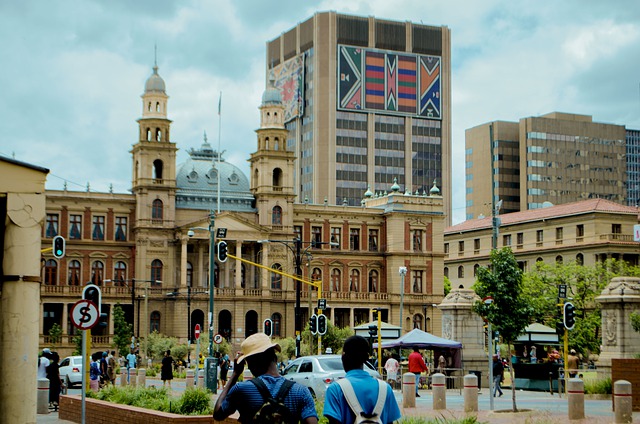
Unemployment is a general problem that has hit many African countries. As a result, a lot of individuals — ranging from graduates and undergraduates down to skilled and unskilled workers — have remained without jobs for many years. On the part of many graduates, it is either what they studied is not among careers that are highly sought after, or other factors have kept them out of the labour market.
Businesses have had to adapt significantly in recent years. While some took to working remotely and going digital, others reskilled to meet increased competition. This has brought about a shift in the careers being demanded. Because everyone is looking for ways to make ends meet, people are also acquiring new skills to fit into the changing labour market.
South Africa is one of the African countries faced with significant unemployment challenges, with youth unemployment remaining among the highest rates globally.
To cut through the noise and give you something more reliable than general opinion, the careers listed in this article are grounded in three official South African government frameworks: the Department of Home Affairs (DHA) Critical Skills List (Government Gazette, 8 February 2024, with updates around October 2024), the Department of Higher Education and Training (DHET) National List of Occupations in High Demand (OIHD) — gazetted under General Notice GeN 2414 on 16 April 2024 — and the DHET Ministerial Statement on University Enrolment Planning for 2026–2030. When a career shows up across all three of these sources, that is a strong signal of sustained, validated demand.
Below are the careers in high demand in South Africa for 2026.
LIST OF CAREERS AT HIGH DEMAND IN SOUTH AFRICA
1. Medicine and Healthcare
The importance of medicine and healthcare in a country cannot be overemphasized. Medical and healthcare careers remain among the top in demand in South Africa, supported by both the DHA Critical Skills List and the DHET’s National List of Occupations in High Demand. The government’s dedicated Human Resources for Health Strategy 2030 sets out a clear vision and concrete actions to tackle the persistent workforce shortages in this sector.
There are different job opportunities within the medical and healthcare space — Medicine and Surgery, Nursing, Pharmacy, Laboratory Technology, Dentistry, and more. Regardless of the specialty, the goal is to restore and maintain the health of patients. Practitioners diagnose and treat human diseases, ailments, injuries, and other health conditions.
Specific roles confirmed on the DHA Critical Skills List include Doctors, Specialists, Nurses, Pharmacists, and Dentists. Integrated Early Childhood Development (ECD) Practitioners also appear on the OIHD, indicating that the skills gap extends beyond hospital-based medicine into foundational social and health services. The National Skills Fund (NSF) is actively funding learners in priority health occupations identified in the 2024 OIHD.
The National Development Plan (NDP) 2030’s goal of eliminating poverty and reducing inequality is directly tied to improving the health of all South Africans, making this sector a long-term strategic priority for government investment and graduate production.
Skills required for this career path include:
- Excellent communication skills
- Attention to detail
- Emotional intelligence
- Professionalism
- Problem-solving skills
- Decision-making skills
- Resilience
- Teamwork skills
Educational pathways range from university degrees (NQF Levels 8–10) for professional roles such as Doctors, Pharmacists, and Dentists, to TVET college programmes for paramedical and support roles such as Nursing Auxiliaries and ECD Practitioners.
2. Engineering, Construction, and Artisan Trades
Engineering, construction, and the artisan trades are another major pillar of high-demand careers in South Africa for 2026. These sectors are driven by two powerful forces: the need for large-scale national infrastructure development as outlined in the NDP 2030, and the government’s strategic shift towards renewable energy capacity as set out in the Department of Electricity and Energy’s Strategic Plan for 2025–2030.
Specific occupations confirmed on the National List of Occupations in High Demand include Electricians and Millwrights. Engineering specialisations in Civil, Electrical, Mechanical, and Chemical Engineering are also identified as high demand through the OIHD and Critical Skills List. The demand shows strong regional patterns — Mpumalanga’s provincial OIHD highlights mining-related engineering occupations, while the Western Cape shows concentrated demand in renewable energy and construction engineering.
Petroleum and Industrial Engineering remain among the more specialized engineering fields with strong employer demand. Petroleum Engineers locate and assess reservoirs of natural gas and crude beneath the earth’s surface, while Industrial Engineers design efficient systems integrating workers, machines, materials, and technology.
The DHET’s Revised Strategic Plan 2025–2030 mandates increased production of graduates in scarce skills, with engineering disciplines featuring prominently. The involvement of Sector Education and Training Authorities (SETAs) such as those covering construction and engineering sectors is also key in identifying and addressing specific skills gaps.
Skills required in this field include:
- Strong technical skills
- Teamworking skills
- Problem-solving skills
- Ability to work under pressure
- Numerical and analytical skills
- IT skills
- Good communication skills
Professional engineering roles — such as Civil, Mechanical, Electrical, and Chemical Engineers — are predominantly university tracks requiring a Bachelor’s degree (NQF Level 7) and registration with the Engineering Council of South Africa (ECSA). Artisan and technician roles such as Electrician, Plumber, Welder, and Millwright are developed primarily through TVET colleges and apprenticeships.
3. Information Technology
The ICT sector in South Africa is large and strategically important. Research indicates that South Africa has an estimated 20,000-plus companies in the ICT sector. However, there is a documented shortage of specialized skills in the sector, which negatively affects output and economic competitiveness.
Software Developers appear explicitly on the National List of Occupations in High Demand, confirming that employers are actively struggling to find qualified candidates. The Western Cape’s provincial OIHD also specifically highlights strong demand for ICT professionals, reinforcing the sector’s national and regional importance.
The MICT SETA’s Sector Skills Plan for 2025–2030 outlines a comprehensive strategy to address identified ICT skills gaps and expand access to training at both TVET college and university levels. The government’s Fourth Industrial Revolution (4IR) strategy further cements the importance of this field, with a focus on artificial intelligence, big data analytics, cloud computing, and cybersecurity.
Key roles in high demand within the ICT space include:
- Software Developers/Engineers — build and maintain the digital platforms underpinning modern business and government services
- Cybersecurity Analysts — protect national infrastructure, corporate data, and citizen information from growing cyber threats
- Data Scientists and Analysts — extract actionable insights from large datasets to inform business strategy and public policy
- Network Administrators — manage and maintain computer networks ensuring connectivity and security
- IT Support Specialists — provide first-line technical assistance to users and organisations
- Systems Analysts — bridge the gap between business needs and IT solutions
IT managers and senior professionals are also in demand, responsible for planning, coordinating, and directing computer and information system activities — including hardware installation, software maintenance, IT strategy, and collaboration with department heads.
University degrees in Computer Science, Information Technology, and Software Engineering (NQF Level 7 and above) cater to complex roles. TVET colleges offer technician-level qualifications (NQF Levels 5–6) for roles such as Network Administrator and IT Support Specialist. Continuous upskilling through professional certifications is essential in this fast-changing field.
4. Finance
The financial sector remains consistently in demand for professionals across a wide range of specialisations, including Financial Managers, Actuaries, Accountants, Statisticians, and Economists. Chartered Accountants appear on the government’s official high-demand occupations data, indicating a need for specialized financial expertise across multiple sectors of the economy.
Financial Managers oversee financial statements, produce financial reports, direct investment activities, and develop long-term financial strategies. They also work alongside IT departments to plan and maintain robust financial systems.
Actuaries deal with the measurement and management of risk and uncertainty, calculating financial values associated with uncertain events — such as insurance premiums or pension contributions — that are subject to risk.
Skills required for finance careers include:
- Strong analytical and numerical skills
- Asset and liability management
- Good oral and written communication
- Problem-solving ability
- IT and financial software proficiency
- Sound business judgment
A qualification in Mathematics, Statistics, Economics, or Finance is typically required. Chartered Accountancy requires registration with the South African Institute of Chartered Accountants (SAICA) following completion of an accredited degree and prescribed experience.
5. E-Commerce and Digital Marketing
Commerce has evolved significantly beyond traditional exchange methods. E-commerce now supports the buying and selling of goods electronically, allowing individual consumers and producers to transact with far fewer barriers than before. South Africa ranks among the leading African markets for e-commerce activity, and this segment continues to grow.
This growth has created sustained demand for professionals in digital marketing, e-commerce management, and related fields. Digital marketers provide companies with targeted online advertising, while marketing strategists create comprehensive marketing plans, identify messaging, and execute strategies across digital channels.
The rise of social commerce, mobile payments, and data-driven advertising has widened the scope of roles in this space. Professionals with skills in search engine optimization (SEO), content marketing, paid digital advertising, and customer analytics are in growing demand by South African businesses seeking to compete in the digital economy.
6. Agriculture and Agricultural Engineering
Agriculture remains a foundational sector of the South African economy, and the demand for agricultural professionals — particularly those who bring technical and engineering expertise — is well-documented at both national and provincial levels. The Free State and Northern Cape provincial OIHD reports both highlight significant demand in the agricultural sector, reflecting agriculture’s economic importance in those regions.
Agricultural Engineers are of particular importance, applying engineering principles to solve problems in food production, land use, and agribusiness. They design farm machinery suited to local environments, develop irrigation systems, improve post-harvest processing and storage technologies, and support sustainable land management. This aligns directly with the government’s goal of transforming subsistence farming into profitable commercial agriculture.
Plant Managers and Industrial Production Managers are also sought after, overseeing the daily operations of manufacturing and processing facilities that are central to turning raw agricultural output into finished goods.
The government’s OIHD and strategic development plans identify agricultural skills as essential for economic diversification beyond mining and resource extraction, particularly in rural provinces where agriculture is the primary economic driver.
7. Law
Law is a well-recognized and consistently in-demand career in South Africa. Lawyers work in both the public and private sectors, advising clients on how the law applies to their circumstances, representing them in court, preparing legal documents, interviewing witnesses, conducting depositions, arguing motions, and conducting trials.
What lawyers do is crucial to every part of society — from government and organizations through to individual citizens. Legal services are needed for dispute resolution, defence, compliance, and counsel on all manner of matters.
University Lecturers and legal academics also appear as high-demand occupations within the DHET’s planning framework, reflecting the need to develop and sustain quality legal education capacity at South African universities.
Skills required for a successful legal career include:
- A deep understanding of the law
- Ability to analyze complex information
- Attention to detail
- Logical reasoning
- Sound judgment
- Strong persuasion and advocacy skills
The educational pathway is a university degree in Law (LLB), typically at NQF Level 8, followed by admission to the bar or roll of advocates through the relevant professional body.
8. Human Resources
As businesses and organisations continue to grow in South Africa, the demand for Human Resources professionals follows. HR professionals manage the full employment lifecycle — from recruiting and interviewing candidates to onboarding, managing employee relations, handling grievances, and, where necessary, terminating employment agreements.
The HR function is central to the success of any organisation because it directly shapes workplace culture, compliance, and staff productivity. This makes it a career of sustained relevance across all sectors of the economy, both public and private.
A degree or recognised certification in Human Resource Management is typically required. Qualifications are available at both TVET college and university level, depending on the seniority of the role being targeted.
9. Graphic Design and Creative Technology
Graphic design is a career in consistent demand across South Africa, driven by the growth of digital marketing, e-commerce, and brand communication. Companies increasingly use visual content to run marketing campaigns and advertise their products and services online and offline.
A graphic designer creates images, motion graphics, and digital content — either by hand or using design software — for the purpose of communication and persuasion. Quality visual design builds brand identity and leaves lasting impressions on consumers.
Core output for graphic designers includes logos, websites, animations, social media content, product illustrations, and advertising materials. The growth of mobile-first businesses and social commerce has further expanded the range of platforms requiring professional design work.
While a formal degree is not always mandatory, a foundation degree, HND, or bachelor’s degree in Graphic Design, Visual Communication, or Computer Science provides a strong advantage. Proficiency in industry tools such as Adobe Creative Suite is essential.
10. Green Economy and Renewable Energy
A newer but rapidly growing category of in-demand careers in South Africa is centred on the green economy, particularly renewable energy. Solar Installation Technicians appear explicitly on the National List of Occupations in High Demand, confirming that skills for deploying solar photovoltaic systems are currently in short supply nationally.
The Department of Electricity and Energy’s Strategic Plan for 2025–2030 places strong emphasis on expanding renewable energy capacity — including solar, wind, and emerging hydrogen technologies — to diversify the national energy mix. The DHET has already commissioned research into the specific skills required for the hydrogen economy, and this is being translated into occupational planning and curriculum development.
Other roles in this emerging space include:
- Hydrogen Systems Engineers
- Environmental Project Managers
- Wind Turbine Service Technicians
- Renewable Energy Electrical Engineers
Educational pathways range from TVET college qualifications (NQF Levels 4–6) for installation and maintenance technicians, through to university degrees and postgraduate studies (NQF Levels 7–10) for engineers and project managers working on large-scale renewable energy infrastructure.
CONCLUSION
There are many careers in high demand in South Africa, and this article covered those most consistently validated by official government data for 2026. The careers listed here are not based on speculation — they are grounded in the DHA Critical Skills List, the DHET National List of Occupations in High Demand (gazetted April 2024), and the DHET’s Ministerial Statement on Enrolment Planning for 2026–2030.
One consistent thread across almost every career on this list is the need for digital competency. The world has gone digital, and virtually every job now requires some level of IT literacy. Whether you are entering medicine, engineering, law, or agriculture, exposure to digital tools and data skills will strengthen your position in the South African labour market of 2026 and beyond.
If you are making career choices in South Africa and want to be confident that demand for your skills will hold over the coming years, the fields covered in this article are among the most reliable options available.
Read Also:
- Steps on How to Become a Safety Officer
- Top 15 Careers in Demand Worldwide
- List of Top 14 Careers in Commerce
- List of Top Careers in Acting
- List of Top Careers in Diploma in Law and What to do with it >>>
- List of Top Careers in Life Science and Geography
- Top 18 Careers in Humanities
- How to Become an Insurance Broker In South Africa
- List of 13 Highest Paying Jobs in Nigeria
- How to Answer “Why Should We Hire You?
- 8 Common Job Interview Questions and Answers
- How to Become a Successful Business Manager
- How to Become a Nurse In South Africa
- How to Become a Successful Business Owner
- Steps on How to Become a Biochemist
- What You Can do With a Banking and Finance Degree
- How to Become A Successful Real Estate Agent
- How to Become a Lecturer in South Africa
- How To Become An Investment Banker
- Top Professions That Needs Certification
- Career Tips for School Leavers
- Steps on Preparing for Life After School
- What To Do With A 2.2 (Second Class Lower) Degree
- Top 10 Highest Paying Jobs in the World
- How to Become A Medical Doctor in the USA
- How to Write an Application Letter for a Job
- Top 10 Cheapest Universities in the UK
- Why You Should Study a Course You Love
- How to Achieve What You Dream
- How to Write a Personal Statement for Internship
- How To Turn Your Hobby into a Career
- Salary Structure of Medical Doctors in Europe
- How to Write a Personal Statement for a Job
- How to Enjoy That Unfulfilling Job
- Common Challenges of Working in a Bank
- Factors To Consider When Choosing A University
- Factors to Consider When Writing Your CV
- Top 10 Highest Paying Banks in the USA
- Common Challenges of a Medical Profession
- Common Challenges of the Labour Market
- Top 10 Highest Paying Jobs in the United States
- Common Challenges of a Graduate Trainee
- Top 10 Unprofessional Courses in the World
- Tips on How To Get the Best Out of a Boring Job
- 24 Career Advice That Can Guide You
- Why Your Resume Hasn’t Landed You an Interview
- Ways of Raising Capital for a Startup Business
- Top 14 Work from Home Paying Jobs
- Top Profitable Short Courses to Study
- Top 10 Profitable Things To Invest In
- Top 10 Careers You can Get Into Without Any Degree
- Top 10 Career Mistakes People Make
- The Pros and Cons of Online Courses
- List Of Medical Schools in France
- How to Gather Job Experience While Schooling
- Best Alternatives To Internship
- A Day in The Life of a Banker
- Qualities that Makes a Good Manager
- Top 20 Small Business Ideas to Start at the University
- 6 Things Business Owners Look For in a Graduate
- 10 Tips For Choosing A Career
- Top 10 Cheapest Universities in India
- Top 10 Affordable Universities in the United States
- How to Become an Architect
- How to Become a Flight Attendant
- Top 10 Cheapest Universities in China
- Top 10 Cheapest Universities In Europe
- How to Write a Successful Business Plan
- 10 Steps on How To Become a Chartered Accountant
- Top 10 Best Business Schools in the World
- What To Do With A 3rd Class Degree
- Top 10 Lucrative and Marketable Courses to Study
Don’t miss out on current updates, kindly like us on Facebook & follow us on Follow @EAfinder OR leave a comment below for further inquiries.
Related Articles
- List of Universities in South Africa
- List of TVET Colleges in South Africa
- List of Bursaries in South Africa 2026
Share this page:
Share on Facebook | Share on Twitter